Book Your Appointment


Concerns of a Family Member: Worried about a loved one’s drug use? What you can do to help.
by Layla Abdullatif
May 30, 2026
Watching a loved one struggle with substance use is one of the most difficult experiences a person can face. If you are feeling a heavy mix of fear, guilt, or even anger, please know that these emotions are normal. Addiction doesn’t just affect the individual; it ripples through the entire family, often leaving everyone feeling exhausted and uncertain.
You are not alone, and there are constructive ways to navigate this path. This guide is designed to help you recognize the signs of drug use, understand the impact on your family, and learn how to offer support while maintaining your own well-being.
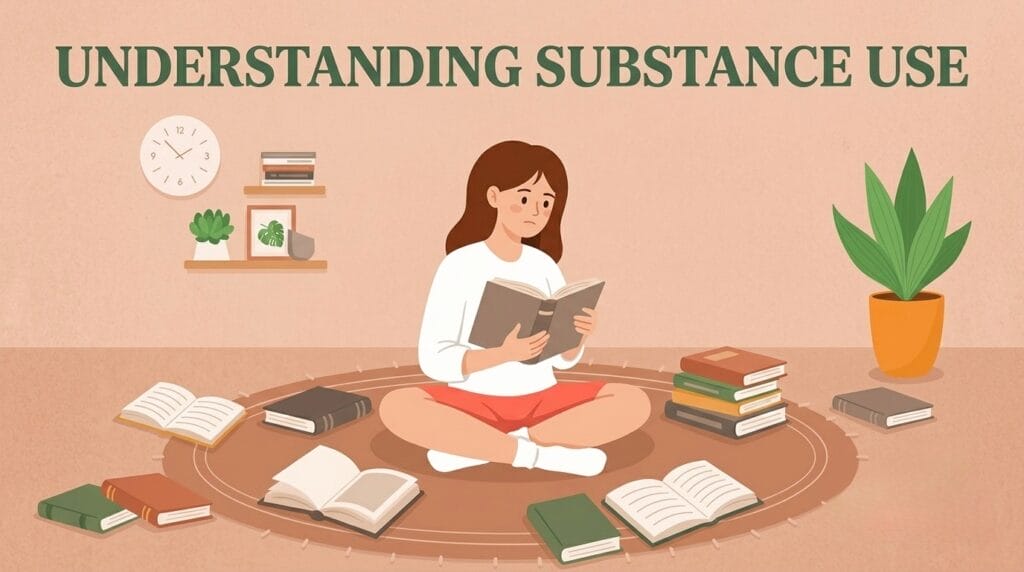
Understanding Substance Use
Substance Use Disorder (SUD) is characterized by the continued use of a drug despite the harm it causes to a person’s health and life. It is a complex condition that physically changes how the brain thinks and processes information.
Shifting your perspective from judgment to understanding is a vital first step. Recognizing that addiction is a chronic health issue rather than a moral failing can help you approach your loved one with the empathy needed to foster a connection.
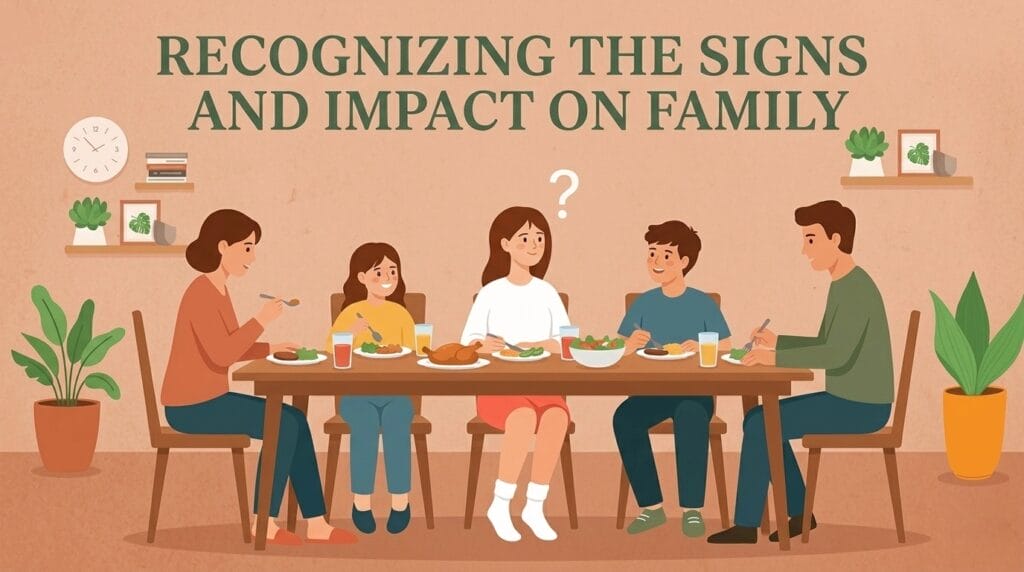
Recognizing the Signs and the Impact on Family
Identifying drug use early can be critical for intervention. Look for changes across these four areas:
- Behavioral: Increased secrecy, sudden mood swings, or loss of interest in hobbies.
- Physical: Changes in sleep patterns, unexplained weight loss or gain, or bloodshot eyes.
- Social: New, “sketchy” friend groups or withdrawing from long-term friends and family.
- Financial: Constantly asking for money or unexplained disappearance of valuables.
As these signs emerge, the family dynamic often shifts. You may feel like you are “walking on eggshells” to avoid conflict. This unpredictability creates immense stress and can force family members into new, unhealthy roles just to keep the peace.
Understanding vs. Enabling
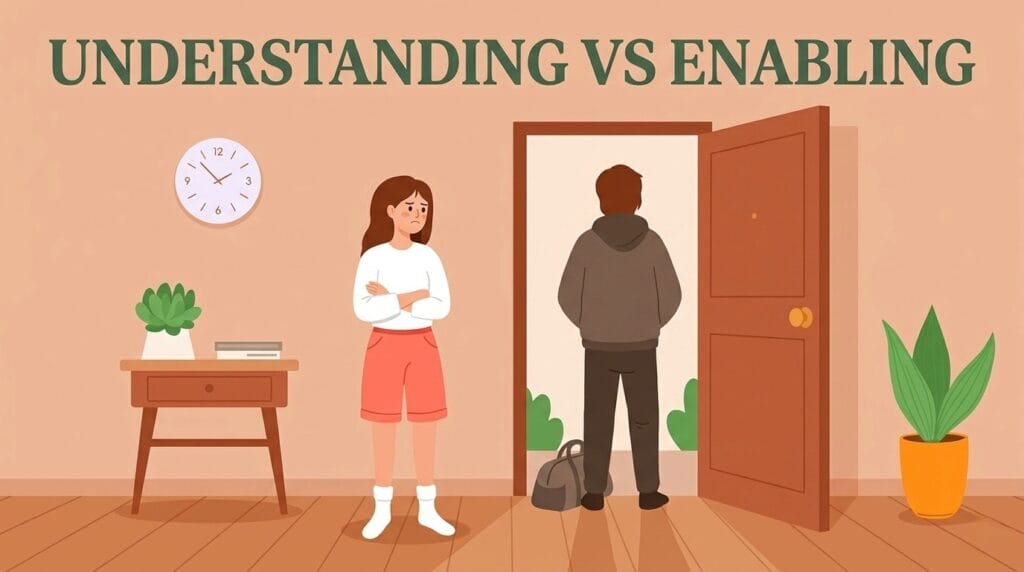
It is natural to want to protect someone you love, but there is a fine line between helping and enabling. Enabling occurs when your actions unintentionally support continued drug use by removing the natural consequences of their behavior.
Examples of enabling include:
- Providing a place to live “rent-free” while they refuse to seek help or contribute.
- Paying for their legal fees, bills, or the addiction itself.
- Making excuses for their behavior to employers or other family members.
- Putting your own life on hold to fix their mistakes.
Helping means supporting their recovery, not their addiction.
How to Connect: Having the Conversation
Talking about drug use is intimidating, but how you approach it matters deeply.
- Choose the right time: Wait for a moment when they are sober and the environment is calm.
- Be non-judgmental: Use “I” statements (e.g., “I feel worried when…”) rather than “you” statements that sound like accusations.
- Focus on specific behaviors: Talk about facts, like missed events or health changes, rather than attacking their character.
- Prepare for denial: It is common for individuals to become defensive. Stay calm and avoid getting drawn into an argument.
Setting Healthy Boundaries
Boundaries are not a way to punish your loved one; they are a way to protect yourself and provide clarity for them.
Be consistent and clear about what you will and will not do. For example, you might say, “I love you and will support your treatment, but I will no longer give you money for your phone bill”. Avoid making empty threats – only set consequences that you are willing to follow through on.
Encouraging Professional Help
Ultimately, the decision to enter treatment must be the individual’s choice. You can encourage them by researching options like therapy, support groups, or rehabilitation centers and offering to go with them to an initial appointment.
What if they refuse help? If a loved one refuses treatment, you must accept the limits of your control. Continue to maintain your boundaries and offer support for recovery, but refuse to enable the addiction.
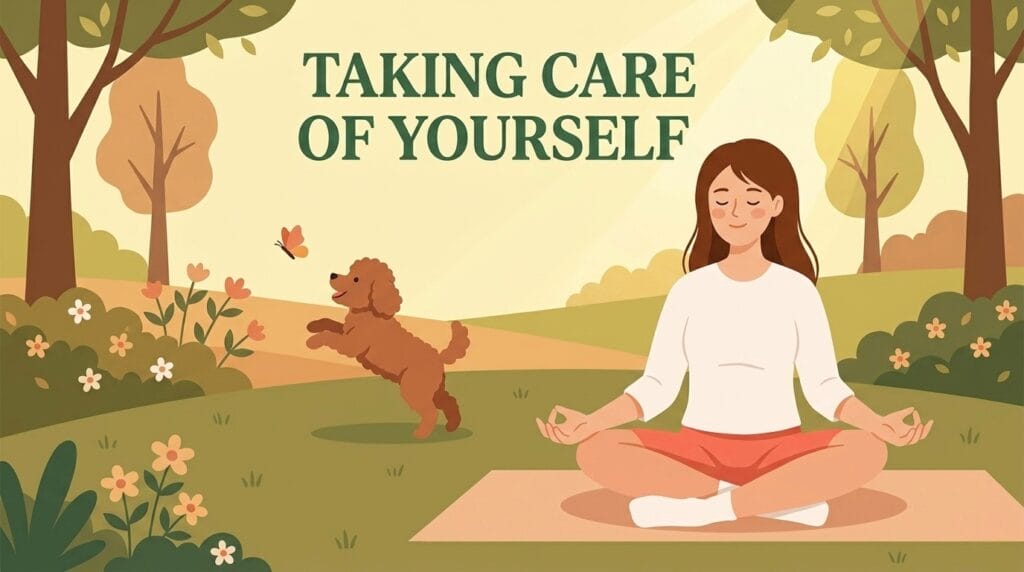
Taking Care of Yourself
You cannot pour from an empty cup. Family members are at high risk for burnout and emotional exhaustion. It is essential that you seek your own support – whether through therapy, support groups like Al-Anon or Nar-Anon, or simply by maintaining your own hobbies and social life.
Conclusion
Recovery is rarely linear; it is often a long journey with many ups and downs. While your influence as a family member is limited, your support is incredibly powerful. By approaching the situation with a blend of compassion, clear boundaries, and professional guidance, you create the best possible environment for your loved one to choose a path toward healing.
If you are struggling to manage the impact of a loved one’s addiction, our clinic is here to support the whole family. Reach out to us today to discuss how we can help you navigate this difficult time.
References
Avenues Recovery. (n.d.). Signs of drug abuse in family members. https://www.avenuesrecovery.com/understanding-addiction/signs-of-an-addict/signs-drug-abuse-family/
Bhandari, S. (2022, June 21). Are you enabling a loved one’s addiction? WebMD. https://www.webmd.com/mental-health/addiction/features/addiction-enabling-a-loved-one
Canada.ca. (2024, February 1). How to help a friend or family member. Government of Canada. https://www.canada.ca/en/health-canada/services/substance-use/talking-about-drugs/help-friend.html
Cuncic, A. (2022, June 2). How to help a family member with an addiction. Psych Central. https://psychcentral.com/addictions/how-to-help-a-family-member-with-an-addiction
Gillette, H. (2023, April 5). Tips for living with someone with an addiction. Healthline. https://www.healthline.com/health/living-with-an-addict
National Rehab Hotline. (2023, August 30). Addiction in the family: Understanding the impact and finding support. https://nationalrehabhotline.org/resources/addiction-in-the-family/
NHS. (2022, November 30). Advice for the families of drug users. https://www.nhs.uk/live-well/addiction-support/advice-for-the-families-of-drug-users/
Pietrangelo, A. (2023, August 4). Helping a person with addiction. Healthline. https://www.healthline.com/health/addiction/helping-an-addict
Strobbe, S. (2023, November 29). Opioid addiction: When a loved one won’t get help. Mayo Clinic Press. https://mcpress.mayoclinic.org/opioids/opioid-addiction-when-a-loved-one-wont-get-help/
UCLA Health. (2022, August 16). Expert advice: How to help an addicted friend or family member get help. https://www.uclahealth.org/news/release/expert-advice-how-to-help-an-addicted-friend-or-family-member-get-help
More Posts